Open post

real-time path guiding using bounding voxel sampling

Bounding Voxel Sampling offers a novel approach to real-time ray tracing, cleverly biasing rays towards light sources using voxel membership for smoother, efficient lighting.

This technique addresses the pixelation issues inherent in pure voxel-based lighting, achieving a balance between realism and performance in demanding applications.

Overview of the Technique

Real-Time Path Guiding with Bounding Voxel Sampling tackles the challenge of efficient, high-quality lighting in dynamic scenes. The core idea revolves around leveraging a voxel representation of the environment to guide ray paths. Instead of traditional path tracing’s random walks, rays are intelligently biased towards light sources based on voxel membership.

This avoids the computational cost of fully random raycasting while mitigating the pixelated shadows often associated with direct voxel lighting. The technique utilizes stratified sampling within voxels and draws inspiration from the SLIC superpixel algorithm for efficient clustering, enabling scalability for complex environments and a large number of entities.

Motivation and Challenges in Real-Time Ray Tracing

Real-time ray tracing promises photorealistic visuals, but faces significant hurdles. Traditional path tracing, while accurate, is computationally expensive, making it unsuitable for interactive frame rates. Simply using voxels for lighting leads to noticeable pixelation in shadows and highlights, diminishing visual quality.

The motivation behind bounding voxel sampling is to bridge this gap – achieving near-real-time performance without sacrificing visual fidelity. Challenges include efficient voxel storage and processing, minimizing raycast costs, and maintaining a balance between realism and performance, especially when handling a large number of entities within a voxel-based game.

Voxel Representation and Sampling

Sparse Voxel Octrees (SVOs) are central, offering efficient storage. Visibility features are represented within voxels using stratified sampling of shading points from the image.

Sparse Voxel Octrees (SVOs) for Efficient Storage

Sparse Voxel Octrees (SVOs) are crucial for managing the large datasets inherent in voxel-based rendering. Unlike dense voxel grids, SVOs only store voxels that contain meaningful data, dramatically reducing memory consumption. This hierarchical structure allows for efficient spatial queries, essential for ray tracing and path guiding.

The octree recursively subdivides space, enabling variable resolution – finer detail where needed, and coarser representation in empty areas. This adaptability is key to balancing visual quality with performance, making SVOs a practical choice for real-time applications. They are foundational for storing and accessing voxel data efficiently.

Bounding Volume Hierarchy (BVH) vs. Voxel Representation

Bounding Volume Hierarchies (BVHs) and voxel representations represent distinct approaches to spatial partitioning for ray tracing. BVHs excel at accelerating ray-triangle intersection tests, common in traditional rendering. However, they can be less effective for global illumination calculations where knowing the presence of light is paramount.

Voxel representations, conversely, directly encode scene occupancy and visibility. While naive voxel grids suffer from pixelation, techniques like bounding voxel sampling leverage voxels to guide rays, not define the entire lighting solution. This hybrid approach combines the strengths of both methods, offering efficiency and smoother results.

Voxel Clustering Techniques

Voxel clustering is crucial for managing the computational cost of processing large voxel datasets in real-time path guiding. Grouping voxels with similar visibility characteristics allows for efficient ray biasing and reduces redundant calculations. The SLIC superpixel algorithm, originating from computer vision, proves effective for this purpose.

SLIC clusters voxels based on local similarity, creating “supervoxels”. These clusters then represent broader visibility features, enabling faster determination of ray directions towards light sources without individual voxel analysis.

SLIC Superpixel Algorithm for Voxel Grouping

The SLIC (Simple Linear Iterative Clustering) algorithm, borrowed from image processing, efficiently groups voxels based on color and spatial proximity. It operates by iteratively assigning each voxel to the cluster with the nearest centroid in a 5D space – 3D spatial coordinates plus color components.

This approach creates compact, perceptually uniform supervoxels, ideal for representing visibility features. The algorithm’s speed and simplicity make it well-suited for real-time applications, enabling dynamic voxel clustering and adaptive path guiding.

Visibility Feature Representation within Voxels

To effectively guide path tracing, each voxel stores representative visibility information. This is achieved by randomly selecting 128 shading points within the image using stratified sampling. These points capture the light reaching the voxel from various directions, forming a statistical representation of its visibility.

This compact feature set allows for quick assessment of light source accessibility, enabling efficient biasing of ray directions without the computational cost of full scene visibility checks. It’s a crucial step for real-time performance.

Stratified Sampling of Shading Points

Stratified sampling is key to gathering representative visibility data within each voxel. Instead of purely random sampling, this technique divides the voxel’s projected area on the image plane into strata, ensuring coverage across different regions.

By selecting shading points from each stratum, the method avoids clustering and provides a more accurate statistical representation of the voxel’s illumination. This improves the quality of the path guiding, leading to more realistic and less noisy results in real-time rendering.

Path Guiding Methodology

Path guiding leverages voxel membership to bias ray directions towards light sources, minimizing wasted raycasts and enhancing efficiency without significant realism loss.

Biasing Ray Directions Towards Light Sources

Effective path guiding hinges on intelligently biasing ray directions. Instead of forcing rays towards specific coordinates, the technique utilizes voxel membership information to subtly nudge them towards light sources.

This approach avoids the computational expense of traditional path tracing while still achieving visually appealing, smooth lighting. By analyzing voxel data, the system determines the probability of encountering a light source in a given direction, and adjusts the ray accordingly. This probabilistic biasing is key to maintaining performance and reducing noise, resulting in a more efficient and visually pleasing rendering process.

Voxel Membership and Ray Direction Adjustment

Determining voxel membership is crucial for guiding rays effectively. The system identifies which voxels a ray passes through, and assesses their proximity to light sources. This information informs a directional bias, subtly altering the ray’s trajectory;

The adjustment isn’t a hard redirect, but rather a probabilistic nudge, preventing abrupt changes and maintaining visual coherence. This method leverages the spatial organization of voxels to efficiently estimate light source visibility, optimizing ray direction without excessive computational cost, leading to faster and more realistic rendering.

Avoiding Pixelation in Shadows

Pixelation in shadows is a common issue with direct voxel-based lighting. Bounding Voxel Sampling mitigates this by avoiding strict voxel alignment for ray termination. Instead, the directional biasing, informed by voxel membership, creates softer shadow edges.

The technique doesn’t rely on precise voxel intersections for shadow determination, but rather uses the voxel data to probabilistically adjust ray paths. This approach effectively blends shadow contributions, resulting in smoother, more natural-looking shadows without sacrificing real-time performance.
Implementation Details

Implementation involves parallelizing voxel processing and integrating the path guiding method into existing ray tracing pipelines, aided by debug visualization tools for Morton codes and paths.

Parallelization Strategies for Voxel Processing

Efficient voxel processing is crucial for real-time performance. The SLIC superpixel algorithm, used for voxel clustering, lends itself well to parallelization, grouping voxels based on local similarity concurrently.

Furthermore, visibility feature representation within voxels – involving stratified sampling of shading points – can be distributed across multiple cores.

This parallel approach significantly reduces processing time, enabling the handling of large voxel datasets and supporting the demands of real-time rendering applications, particularly in complex scenes.

Integration with Existing Ray Tracing Pipelines

Seamless integration is key to adopting bounding voxel sampling. This technique doesn’t replace existing ray tracing pipelines but enhances them by guiding ray directions. It can be implemented as a pre-processing step, generating voxel data and biasing information.

Subsequently, the ray tracer utilizes this data to prioritize paths towards light sources, reducing the number of wasted raycasts.

This modular approach allows for flexible deployment within established rendering engines, minimizing disruption and maximizing compatibility.

Debug Visualization Tools

Effective debugging relies on visualizing the underlying data structures. Tools like Morton code display, revealing voxel organization, are crucial for understanding data layout and identifying potential issues within the sparse voxel octree.

Furthermore, visualizing active paths – the rays being traced – provides insight into the path guiding process, confirming that rays are indeed biased towards light sources.

These tools, often integrated into game engines, enable developers to fine-tune parameters and diagnose performance bottlenecks efficiently.

Morton Code Debugging

Morton codes, representing 3D spatial data as 1D values, are vital for efficient voxel access and storage. Debugging involves visualizing these codes overlaid on the voxel grid, confirming correct spatial ordering and identifying potential inconsistencies.

Displaying the Morton code for each voxel allows developers to verify the octree structure and pinpoint errors in voxel indexing or neighbor calculations.

This visual feedback is essential for ensuring the integrity of the voxel representation and optimizing performance within the path guiding system.

Active Path Visualization

Active Path Visualization is a crucial debugging tool, displaying the ray paths being utilized by navigating actors within the voxel environment in real-time. This allows developers to observe how the path guiding system influences ray direction and distribution.

Visualizing these paths reveals whether rays are effectively biased towards light sources, and identifies potential issues like path stagnation or inefficient exploration of the scene.

By observing path behavior, developers can refine the biasing parameters and ensure optimal performance and visual quality.

Performance Optimization

Optimizing voxel processing involves parallelization, efficient memory management for large datasets, and carefully balancing realism with computational costs for real-time performance.

Reducing Raycast Costs

Raycast cost reduction is paramount for real-time performance. Bounding Voxel Sampling minimizes unnecessary raycasts by intelligently biasing ray directions towards light sources based on voxel membership, rather than exhaustive searches.

This targeted approach significantly reduces the number of ray-scene intersections needed, improving efficiency. Furthermore, leveraging Sparse Voxel Octrees (SVOs) allows for quick spatial queries, avoiding traversal of empty space. The SLIC superpixel algorithm aids in grouping voxels, further streamlining calculations and diminishing the overall raycasting burden.

Memory Management for Large Voxel Datasets

Efficient memory management is crucial when dealing with the large datasets inherent in voxel-based techniques. Utilizing Sparse Voxel Octrees (SVOs) is key, storing only occupied voxels and minimizing wasted space. Hierarchical data structures allow for level-of-detail approaches, loading only necessary voxel data based on viewing distance.

Furthermore, techniques like voxel clustering, employing algorithms such as SLIC, can reduce the number of individual voxels needing storage. Careful consideration of data precision and compression methods further optimizes memory usage, enabling scalability.

Trade-offs Between Realism and Performance

Bounding Voxel Sampling inherently involves trade-offs. While biasing rays towards light sources accelerates rendering, it introduces a slight deviation from pure path tracing, potentially impacting realism. Increasing the number of shading points per voxel – currently 128 – enhances quality but increases computational cost.

Voxel resolution also plays a critical role; higher resolution improves detail but demands more memory and processing power. Striking a balance between these factors is essential for achieving acceptable visual fidelity within real-time constraints.

Applications and Use Cases

Bounding Voxel Sampling excels in real-time rendering for games, voxel-based game development, and 3D environment navigation, especially with numerous entities.

Real-Time Rendering in Games

Real-time path guiding, utilizing bounding voxel sampling, presents a significant advancement for game rendering. By intelligently biasing ray directions, developers can achieve visually appealing ray-traced lighting without the substantial performance costs of traditional path tracing.

This method allows for smoother shadows and more realistic illumination, enhancing the visual fidelity of game environments. The technique’s efficiency is crucial for maintaining high frame rates, even with complex scenes and a large number of light sources. It offers a compelling alternative for studios aiming to integrate ray tracing into their projects.

Voxel-Based Game Development

Bounding voxel sampling seamlessly integrates with voxel-based game development, offering unique advantages for lighting and rendering within these environments. The voxel representation naturally complements the path guiding methodology, enabling efficient light transport calculations directly within the game world’s structure.

This synergy is particularly beneficial for games featuring destructible environments or procedural generation, where dynamic scene changes are frequent. The technique’s ability to handle large numbers of voxels efficiently makes it ideal for expansive, detailed voxel worlds, enhancing both visual quality and performance.

Navigation in 3D Environments

Bounding voxel sampling, while primarily a rendering technique, indirectly benefits navigation in 3D environments. The underlying sparse voxel octree (SVO) structure, crucial for efficient path guiding, is also a powerful data structure for pathfinding. Utilizing the SVO allows for rapid collision detection and path planning, especially in complex scenes.

Furthermore, the technique’s memory efficiency, achieved through sparse voxel representation, enables handling larger navigable areas, even with a substantial number of entities requiring pathfinding simultaneously, as demonstrated in voxel-based game development scenarios.

Pathfinding for a Large Number of Entities

Real-time path guiding, leveraging bounding voxel sampling’s efficient SVO structure, proves particularly valuable when navigating a multitude of agents. The reduced memory footprint, compared to traditional methods, allows storing pathfinding data for extensive areas, supporting up to 40,000 entities concurrently.

This scalability is critical in complex simulations and large-scale games. By decreasing memory usage per chunk, more chunks can be loaded, expanding the navigable space and enabling robust pathfinding even for numerous, independently moving characters or objects.

Comparison with Traditional Path Tracing

Bounding Voxel Sampling excels in speed, offering real-time performance unlike traditional path tracing. However, it introduces potential artifacts, trading some realism for efficiency.

Advantages of Bounding Voxel Sampling

Bounding Voxel Sampling presents significant advantages over conventional path tracing methods, particularly in achieving real-time rendering capabilities. By strategically biasing ray directions towards light sources based on voxel membership, the technique drastically reduces unnecessary raycasts.

This optimization minimizes computational cost while maintaining visually appealing, smooth lighting effects, avoiding the heavy pixelation often associated with direct voxel-based lighting calculations. The method’s efficiency allows for complex scenes and dynamic environments to be rendered interactively, opening doors for advanced real-time applications.

Limitations and Potential Artifacts

Bounding Voxel Sampling, while effective, isn’t without limitations. A potential drawback lies in the inherent approximation introduced by voxelization, which can lead to subtle artifacts in certain scenarios.

Although the technique minimizes pixelation, some loss of realism is possible due to the biasing of rays, potentially affecting the accuracy of global illumination. Careful parameter tuning and potentially higher voxel resolutions are needed to mitigate these effects, balancing performance with visual fidelity.

Related Work

Prior research explored real-time ray tracing and supervoxel clustering, notably the SLIC algorithm (Achanta et al. 2012), influencing this bounding voxel sampling method.

Previous Approaches to Real-Time Ray Tracing

Early attempts at real-time ray tracing faced significant performance bottlenecks, particularly with global illumination techniques like path tracing, deemed too slow for interactive applications as early as 2013. Researchers explored various acceleration structures, including Bounding Volume Hierarchies (BVHs), to reduce raycast costs. However, these methods often struggled to balance speed and visual quality.

More recent strategies have focused on denoising techniques and hybrid rendering approaches, combining rasterization with ray tracing. The core challenge remains efficiently simulating light transport without sacrificing frame rates, leading to the development of innovative sampling and biasing methods like bounding voxel sampling.

Supervoxel Clustering Techniques in Computer Vision

Supervoxel clustering, originating in computer vision, groups pixels with similar characteristics into cohesive regions, offering a computationally efficient representation of images. The SLIC (Simple Linear Iterative Clustering) algorithm, introduced by Achanta et al. in 2012, became a foundational technique due to its speed and effectiveness.

Applying this concept to voxel data allows for grouping voxels with similar visibility conditions, streamlining lighting calculations. This approach reduces the computational burden by operating on clusters rather than individual voxels, enhancing performance in real-time rendering scenarios.

Future Research Directions

Exploring adaptive voxel resolution and dynamic updates promises to refine the technique, balancing visual fidelity with computational cost for enhanced real-time path guiding.

Adaptive Voxel Resolution

Implementing adaptive voxel resolution represents a significant advancement, dynamically adjusting voxel size based on scene complexity and viewing distance. This approach concentrates detail where needed, reducing computational overhead in less critical areas.

Areas with intricate geometry or significant lighting changes would utilize smaller voxels, while simpler regions could employ larger ones. Such a system would optimize memory usage and raycast performance, leading to a more efficient and scalable real-time path guiding solution. Further research could explore algorithms for automatically determining optimal voxel sizes based on perceptual metrics.

Dynamic Voxel Updates

Real-time scenes often feature dynamic elements, necessitating a system for updating the voxel representation efficiently. Static geometry can be pre-processed, but moving objects or changing lighting conditions require on-the-fly voxel adjustments.

Strategies include incremental updates, where only affected voxels are modified, and level-of-detail techniques, allowing for coarser representations of distant or rapidly changing objects. Maintaining coherence between frames is crucial to avoid visual artifacts, potentially utilizing temporal filtering to smooth updates and reduce flickering.

Hardware Considerations

GPU acceleration is vital for voxel processing and ray tracing, demanding significant memory bandwidth. Efficient implementations leverage parallel processing to handle large voxel datasets effectively.

GPU Acceleration for Voxel Processing

Leveraging the GPU’s parallel architecture is crucial for real-time performance with bounding voxel sampling. Voxel traversal, shading point selection, and ray direction biasing all benefit immensely from GPU acceleration. Specifically, algorithms like Morton code debugging and active path visualization, while useful for development, are computationally intensive and demand efficient GPU implementation.

Furthermore, the stratified sampling of shading points within voxels, requiring numerous random number generations, is ideally suited for the GPU’s capabilities. Optimizing memory access patterns and minimizing data transfer between CPU and GPU are also key considerations for maximizing performance gains.

Memory Bandwidth Requirements

Bounding voxel sampling’s memory footprint is a significant concern, particularly with large environments and high voxel resolutions. Storing voxel data, including visibility features derived from stratified sampling of shading points, demands substantial memory bandwidth. Efficient compression techniques and sparse voxel octree (SVO) implementations are vital to mitigate this.

Furthermore, dynamic voxel updates, if implemented, exacerbate bandwidth needs. Careful consideration must be given to data streaming and caching strategies to avoid bottlenecks, ensuring the GPU can access voxel data quickly enough for real-time rendering.

Bounding voxel sampling presents a promising path towards efficient real-time ray tracing, balancing visual fidelity with performance through intelligent voxel utilization and path guiding.

Key findings demonstrate that biasing ray directions based on voxel membership significantly reduces raycast costs while maintaining visually appealing, smooth raytraced lighting. Utilizing the SLIC superpixel algorithm for voxel clustering proves effective in grouping voxels with similar visibility, enhancing performance.

The technique avoids the heavy pixelation often associated with direct voxel lighting by subtly guiding rays towards light sources, rather than forcing precise coordinate paths. Debugging tools, like Morton code visualization and active path displays, are crucial for implementation and optimization. This approach offers a viable path for real-time applications.

Potential Impact on Real-Time Rendering

Real-time path guiding with bounding voxel sampling holds substantial promise for revolutionizing rendering in games and interactive 3D environments. The technique’s efficiency allows for more complex lighting scenarios without sacrificing frame rates, potentially enabling higher visual fidelity.

Furthermore, its application extends to voxel-based game development and large-scale navigation systems, supporting pathfinding for numerous entities. By reducing computational demands, this method could unlock new possibilities for dynamic and realistic real-time experiences, bridging the gap between path tracing and traditional rendering.


Open post

rapid set concrete leveler instructions

Article Plan: Rapid Set Concrete Leveler Instructions

This comprehensive guide details using CTS Rapid Set products—Non-Sag & Self-Leveling Sealants—for concrete leveling, covering preparation, application, and long-term care.

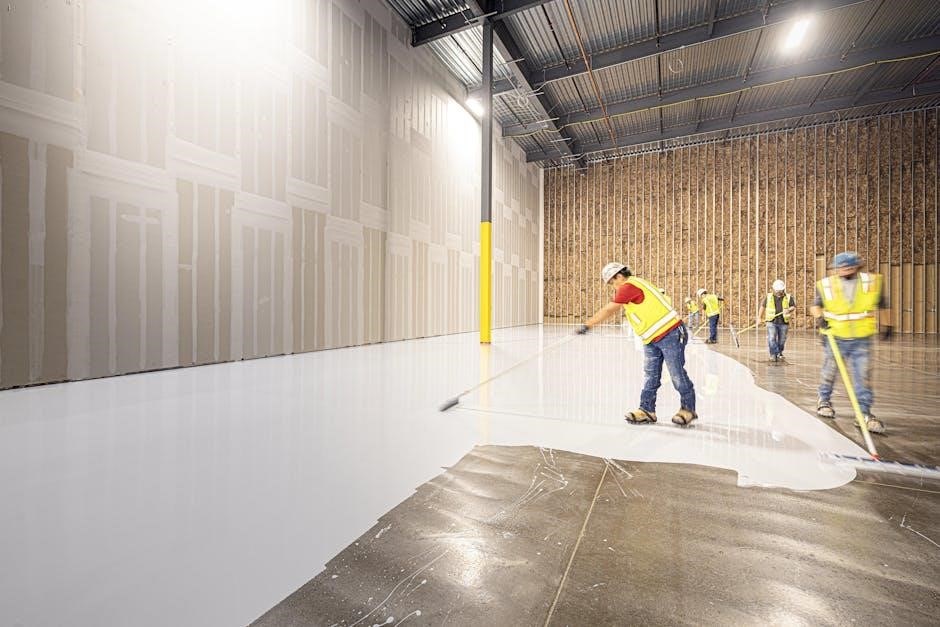
Rapid Set concrete levelers represent a significant advancement in construction materials, offering a swift and efficient solution for achieving perfectly level surfaces. Unlike traditional concrete which requires extended curing times, these innovative products, like those from CTS Cement – including their Non-Sag and Self-Leveling Sealants – dramatically reduce project timelines. This is particularly beneficial for renovations and projects with tight schedules.

These levelers are formulated using advanced technology, providing superior strength and durability. They are ideal for both professional contractors and DIY enthusiasts seeking a reliable and time-saving method for floor preparation and concrete repair.

Understanding Rapid Set Technology

Rapid Set technology hinges on a unique chemical composition, differing significantly from conventional Portland cement-based concretes. CTS Cement’s products, like their Non-Sag Sealant and Adhesive and Self-Leveling Sealant, utilize solvent-free hybrid silane polyether technology. This formulation allows for incredibly fast setting and hardening, minimizing downtime.

The benefits include reduced shrinkage, enhanced adhesion, and superior durability. This innovative approach delivers a high-performance solution, streamlining construction processes and ensuring long-lasting results, especially when compared to traditional methods requiring lengthy curing periods.

Chemical Composition & Benefits

CTS Rapid Set products distinguish themselves through their solvent-free hybrid silane polyether base. This composition provides a non-shrink characteristic, crucial for maintaining dimensional stability during setting. The absence of solvents contributes to lower VOC emissions, enhancing workplace safety and environmental responsibility.

Key benefits include exceptional adhesion to various substrates, high flexibility, and resistance to weathering. These sealants and adhesives offer superior performance in demanding applications, delivering a durable and long-lasting bond while minimizing potential for cracking or failure.

Setting Time Comparison: Traditional vs. Rapid Set

Traditional concrete levelers often require extended setting and curing times, potentially delaying project completion by days. Rapid Set technology, however, dramatically reduces this timeframe. While traditional mixes can take 24-72 hours to fully harden, Rapid Set formulations are engineered for significantly faster performance.

This accelerated setting allows for quicker return to service, minimizing downtime and increasing project efficiency. The reduced wait time is particularly beneficial for time-sensitive repairs or applications where rapid strength gain is essential, offering a substantial advantage over conventional methods.

Applications of Rapid Set Concrete Levelers

Rapid Set concrete levelers excel in diverse applications demanding swift and durable results. Primarily, they are ideal for floor leveling prior to installing various flooring materials like tile, hardwood, or laminate, ensuring a perfectly smooth and stable substrate. Beyond flooring prep, these levelers effectively patch damaged concrete surfaces – cracks, spalls, and uneven areas – restoring structural integrity.

CTS’s Non-Sag and Self-Leveling Sealants, based on silane polyether technology, broaden application possibilities, including sealing and adhering in demanding environments, offering versatile solutions for both professional contractors and DIY homeowners.

Floor Leveling Before Flooring Installation

Proper floor leveling is paramount for successful flooring installation, and Rapid Set levelers deliver exceptional performance. Uneven subfloors can cause issues like squeaking, tile cracking, and uneven wear. Rapid Set products, particularly self-leveling formulas, create a flawlessly smooth surface, accommodating various flooring types.

The quick setting time minimizes project delays, allowing for faster flooring installation. Utilizing these levelers ensures optimal adhesion and longevity of the finished floor, providing a stable and aesthetically pleasing result, crucial for both residential and commercial projects.

Patching Damaged Concrete Surfaces

Rapid Set concrete levelers excel at repairing spalled, cracked, or otherwise damaged concrete surfaces efficiently. These products offer a robust solution for restoring structural integrity and improving aesthetics. Non-sag formulas are ideal for vertical repairs, preventing material run-off, while self-leveling options quickly fill larger depressions.

The fast-setting nature minimizes downtime and disruption. Properly prepared surfaces, combined with Rapid Set’s advanced technology, create durable, long-lasting patches that seamlessly blend with existing concrete, offering a professional finish for both functional and cosmetic improvements.

Tools and Materials Required

Successfully applying Rapid Set concrete leveler demands specific tools and materials for optimal results. Essential items include the Rapid Set concrete leveler itself – choosing between Non-Sag and Self-Leveling formulas based on the project. You’ll need appropriate mixing buckets, a drill equipped with a robust mixing paddle, and measuring containers for accurate proportions.

Crucially, prioritize safety with gloves, a dust mask, and eye protection. Additional tools may include a trowel, screed board, and a primer suitable for concrete surfaces to ensure strong adhesion and a flawless finish.

Safety Gear (Gloves, Mask, Eye Protection)

Working with Rapid Set concrete levelers necessitates strict adherence to safety protocols. Cement-based products can be irritating to skin, eyes, and the respiratory system. Therefore, wearing heavy-duty, chemical-resistant gloves is paramount to prevent skin contact and potential burns. A properly fitted dust mask or respirator is crucial to avoid inhaling cement particles, safeguarding your lungs.

Furthermore, safety glasses or goggles are essential to protect your eyes from splashes or airborne debris during mixing and application. Prioritizing these safety measures ensures a safe and comfortable working environment.

Mixing Equipment (Buckets, Drill with Mixing Paddle)

Proper mixing is vital for achieving optimal Rapid Set concrete leveler performance. You’ll require clean, sturdy buckets – plastic is preferable – of adequate size to accommodate the batch you’re preparing, following the product’s instructions. A variable-speed drill is essential, coupled with a robust mixing paddle specifically designed for concrete or mortar.

Avoid using paddles that are bent or damaged, as they won’t mix effectively. Ensure the drill has sufficient power to handle the viscosity of the leveler. Having multiple buckets can streamline the process, especially for larger projects.

Surface Preparation – Crucial First Steps

Thorough surface preparation is paramount for successful Rapid Set concrete leveler adhesion and longevity. Begin by meticulously removing all debris – dust, dirt, grease, oil, loose particles, and any existing coatings. A concrete grinder or scraper may be necessary for stubborn residues. The surface must be structurally sound and free from cracks or voids that could compromise the leveler’s integrity.

Repair any significant damage before proceeding. Finally, consider priming the surface; this enhances bonding and prevents rapid moisture absorption, leading to a stronger, more durable result.

Cleaning & Removing Debris

Effective debris removal is the foundation of a successful Rapid Set application. Start with a thorough sweeping to eliminate loose particles. Next, employ a vacuum with a HEPA filter to capture fine dust. For stubborn contaminants like oil or grease, utilize a concrete degreaser, following the manufacturer’s instructions carefully.

Scraping may be needed for paint or adhesive remnants. Ensure the surface is completely dry before proceeding. Any remaining debris will hinder proper bonding and potentially cause leveler failure, so diligence is key.

Priming the Surface for Optimal Adhesion

Priming is critical for ensuring a strong, lasting bond with Rapid Set concrete levelers. Select a primer specifically designed for concrete and compatible with the leveler being used. Apply the primer evenly, following the manufacturer’s recommended coverage rate – typically with a brush, roller, or sprayer.

Allow the primer to fully dry before pouring the leveler; drying times vary based on temperature and humidity. Priming seals the concrete, reduces porosity, and promotes superior adhesion, preventing potential issues like delamination.

Mixing Instructions: Achieving the Right Consistency

Precise mixing is paramount for Rapid Set concrete levelers to perform optimally. Always follow the manufacturer’s water-to-powder ratio meticulously – deviations can compromise strength and setting time. Use a drill with a mixing paddle in a clean bucket, adding powder slowly to the water while mixing continuously.

Mix thoroughly, scraping the sides and bottom to ensure a uniform, lump-free consistency. Avoid over-mixing, which can introduce excessive air. The ideal consistency resembles a thick, creamy paste.

Pouring and Spreading the Leveler

Once mixed, promptly pour the Rapid Set leveler onto the prepared surface. Begin in the lowest area and work your way outwards, ensuring continuous coverage to avoid cold joints. For larger areas, pour in manageable sections. Immediately after pouring, use a screed board to distribute the material evenly across the surface, guiding it to fill low spots.

Avoid overworking the leveler during this stage; focus on achieving the desired depth and eliminating significant imperfections before proceeding to the next step.

Leveling Techniques: Ensuring a Smooth Finish

Achieving a perfectly level surface requires skillful technique. Following the screed board pass, utilize a magnesium float trowel to begin initial smoothing, embedding the aggregate and removing any surface irregularities. Allow a slight set before switching to a steel trowel for a final, polished finish.

For self-leveling compounds, minimal troweling may be needed. Feather edges carefully to blend with existing concrete. Proper technique minimizes imperfections and maximizes the leveler’s performance.

Using a Screed Board

A screed board is essential for initial leveling of rapid-set concrete. Position the board across the poured leveler, using a sawing motion to distribute the material evenly. Ensure the screed board spans at least two supports or screed guides for consistent results.

Apply firm, even pressure, removing excess material and filling low spots. Multiple passes, at different angles, refine the surface. Proper screeding establishes the foundational level before troweling, crucial for a smooth, durable finish.

Utilizing a Trowel for Final Smoothing

After screeding, a trowel refines the surface of the rapid-set concrete leveler. Begin with a steel trowel, using overlapping arcs and consistent pressure. This embeds larger aggregate and closes surface pores. For a glass-smooth finish, transition to a magnesium float, then a final steel trowel pass.

Maintain a slight downward angle, avoiding digging into the surface. Work quickly, as rapid-set concrete gains strength fast. Proper troweling minimizes imperfections and maximizes durability, creating a flawless base for flooring.

Curing Process & Timing

Rapid Set concrete levelers, unlike traditional mixes, achieve significant strength remarkably quickly. While not requiring extensive curing, proper hydration is still vital. Mist the surface lightly with water immediately after troweling to aid initial set, avoiding saturation.

Foot traffic can typically resume within 2-4 hours, and most flooring installations within 24-72 hours, depending on ambient temperature and product specifications. Full strength is usually attained within 7 days. Protect from extreme temperatures and direct sunlight during this period.

Troubleshooting Common Issues

Cracking can occur due to rapid drying or excessive shrinkage; maintain consistent moisture during initial set and consider control joints for larger areas. Improper mixing – too much or too little water – leads to weak spots or uneven setting.

Always adhere strictly to the manufacturer’s water-to-powder ratio. If the mix sets too quickly, it indicates insufficient water; conversely, a soupy mix suggests overwatering. Address these issues promptly during application for optimal results and a durable, level surface.

Cracking & Shrinkage Prevention

To minimize cracking, proper curing is paramount; maintain consistent moisture levels for the first 24-72 hours using plastic sheeting or a curing compound. Controlling the environment—temperature and humidity—also plays a vital role.

Avoid rapid temperature changes and direct sunlight during the initial set. For larger pours, consider incorporating shrinkage-reducing admixtures. Proper surface preparation and adherence to the recommended mixing ratios are crucial preventative measures, ensuring a durable and crack-resistant leveled surface.

Addressing Improper Mixing

If the rapid set concrete leveler is mixed with too much or too little water, its performance will be compromised. A too-dry mix results in poor flow and adhesion, while excess water weakens the final product and extends setting time.

If improperly mixed, do not attempt to salvage the batch. Discard it and remix according to the manufacturer’s instructions. Thoroughly clean mixing equipment before remixing. Accurate measurement and consistent mixing with a drill and paddle are essential for optimal results and prevent costly rework.

CTS Rapid Set Product Overview (Non-Sag & Self-Leveling)

CTS Cement offers specialized Rapid Set products designed for diverse leveling needs. Their Non-Sag Sealant and Adhesive excels in vertical applications, preventing slumping and providing robust bonding. Available in black, it utilizes solvent-free hybrid silane polyether technology.

Conversely, the Self-Leveling Sealant is ideal for horizontal surfaces, flowing easily to create a smooth, even finish. Both formulations are known for their rapid setting times and non-shrink characteristics, offering professional-grade performance for contractors and DIY enthusiasts alike.

Safety Precautions & Handling

When working with Rapid Set concrete levelers, prioritize safety. Always wear appropriate personal protective equipment (PPE), including gloves, a dust mask, and eye protection to prevent skin and respiratory irritation. Ensure adequate ventilation during mixing and application.

Avoid direct contact with the product, and if contact occurs, rinse thoroughly with water. Store materials in a cool, dry place, away from direct sunlight and moisture. Follow all manufacturer’s instructions on the product packaging for safe handling and disposal procedures.

Estimated Costs & Coverage Rates

The cost of Rapid Set concrete leveler varies based on product type (Non-Sag vs. Self-Leveling) and quantity purchased. Expect to pay roughly $40-$80 per 50lb bag, though prices fluctuate with market conditions. Coverage rates depend on the desired thickness and surface porosity.

Generally, a 50lb bag covers approximately 0.5 to 0.75 cubic feet. Factor in primer costs ($20-$40 per gallon) and tool rentals. Accurate estimation requires measuring the area and calculating the volume of leveler needed for the project.

Long-Term Maintenance & Care

Properly cured Rapid Set concrete leveler requires minimal long-term maintenance. Avoid exposing the surface to harsh chemicals or extreme temperature fluctuations, which could compromise its integrity. Periodic cleaning with a mild detergent and water is sufficient to maintain appearance.

Sealing the leveled surface with a concrete sealer can enhance durability and protect against staining. Inspect annually for any signs of cracking or deterioration, addressing minor issues promptly to prevent larger problems. Regular care ensures a lasting, smooth, and level surface.

Open post

oregon driver’s manual 2024 pdf

Oregon Drivers Manual 2024 PDF: A Comprehensive Guide

The 2024 Oregon Driver Manual, available as a free PDF, is your essential resource for mastering Oregon’s traffic laws and safe driving techniques.

Availability and Access Methods

Accessing the Oregon Driver Manual 2024 PDF is remarkably straightforward. The primary method is a free download directly from the official Oregon Department of Motor Vehicles (DMV) website. This digital format offers unparalleled convenience, allowing drivers to study anytime, anywhere, and even print physical copies if desired.

Alternatively, physical copies of the manual are also available at various Oregon DMV field offices. This provides an option for those who prefer a tangible resource or lack consistent internet access. Both the online PDF and the physical copies contain the same vital information, ensuring all Oregon drivers have equal access to crucial driving knowledge. The DMV provides editions in both English and Spanish.

Official Oregon DMV Website Download

The easiest and most convenient way to obtain the Oregon Driver Manual 2024 PDF is through the official Oregon DMV website. A direct link to the downloadable PDF is prominently featured on their site, ensuring quick and easy access for all Oregon residents.

Downloading from the official source guarantees you have the most up-to-date and accurate version of the manual, free from potential errors or outdated information found on unofficial websites. The DMV website provides a secure and reliable platform for accessing this essential resource. This online availability allows for immediate study preparation, eliminating any waiting time associated with physical copies.

PDF Format Benefits

The Oregon Driver Manual 2024’s PDF format offers numerous advantages for aspiring drivers. Its portability allows access on various devices – computers, tablets, and smartphones – enabling study anytime, anywhere. The PDF is easily printable, providing a tangible copy for highlighting and note-taking during preparation for the DMV knowledge test.

Furthermore, the PDF format ensures consistent formatting across all platforms, preserving the manual’s layout and readability. Digital accessibility features, such as search functionality, allow quick location of specific information within the document. This convenient format streamlines the learning process and enhances test preparation efficiency.

English and Spanish Versions

Recognizing Oregon’s diverse population, the Oregon DMV provides the 2024 Driver Manual in both English and Spanish. This dual-language availability ensures accessibility for a wider range of residents preparing for their driver’s license exams. Individuals can conveniently download the version that best suits their language preference directly from the official DMV website.

Offering the manual in Spanish removes language barriers, promoting road safety by ensuring all drivers understand Oregon’s traffic laws and regulations. Both versions contain identical, up-to-date information, guaranteeing consistent test preparation regardless of the chosen language. This commitment to inclusivity supports equitable access to driving privileges for all Oregonians.

Key Content Areas Covered in the Manual

The manual comprehensively covers Oregon traffic laws, road signs, and safe driving practices – all crucial for passing the DMV knowledge test successfully.

Traffic Laws and Regulations

The Oregon Driver Manual meticulously details the state’s traffic laws and regulations, forming the bedrock of safe driving within Oregon. It provides a clear explanation of right-of-way rules, speed limits for various road types, and the legal requirements concerning lane usage and passing other vehicles.

Understanding these laws is paramount, as all questions on the official DMV knowledge test are directly based on this information. The manual clarifies rules regarding intersections, including controlled and uncontrolled scenarios, as well as specific regulations pertaining to bicycles and pedestrians.

Furthermore, it outlines the legal consequences of traffic violations, emphasizing the importance of responsible driving behavior. Drivers will find detailed guidance on Oregon’s impaired driving laws and the requirements for vehicle registration and insurance.

Road Signs and Signals

A significant portion of the Oregon Driver Manual is dedicated to a comprehensive overview of road signs and traffic signals, crucial for navigating Oregon’s roadways safely and legally. The manual provides detailed explanations and visual examples of each sign type – regulatory, warning, and guide signs – ensuring drivers can correctly interpret their meaning.

It covers the various signal types, including traffic lights, flashing signals, and arrow signals, clarifying driver responsibilities at each. Understanding these visual cues is essential for preventing accidents and maintaining traffic flow.

The manual also addresses pavement markings, such as lane dividers and crosswalks, and their significance. Mastery of road sign and signal recognition is directly tested on the DMV knowledge exam, making this section vital for successful test completion.

Safe Driving Practices

The 2024 Oregon Driver Manual emphasizes a wide range of safe driving practices designed to minimize risks and promote responsible behavior behind the wheel. This section details crucial topics like maintaining a safe following distance, proper lane changing techniques, and the dangers of distracted driving – including cell phone use.

It provides guidance on driving in adverse weather conditions, such as rain, snow, and fog, stressing the importance of reduced speed and increased caution. The manual also covers pedestrian and bicycle safety, highlighting driver responsibilities to protect vulnerable road users.

Furthermore, it addresses the risks associated with impaired driving, including alcohol and drug use, and the legal consequences. Adhering to these practices is not only essential for passing the DMV test but, more importantly, for ensuring the safety of yourself and others on Oregon’s roads.

Preparing for the Oregon DMV Knowledge Test

The Oregon DMV’s 2024 manual is the primary study guide; all knowledge test questions are directly based on its content and regulations.

Manual as Primary Study Material

The official 2024 Oregon Driver Manual serves as the cornerstone for anyone preparing to take the DMV knowledge test. It’s meticulously designed to cover every topic that will appear on the exam, ensuring comprehensive preparation. All questions on the official test are sourced directly from the handbook, making it an indispensable resource.

Downloading the PDF version allows for convenient study anytime, anywhere. Familiarizing yourself with the manual’s content is not merely recommended – it’s essential for success. Focus on understanding the rules of the road, recognizing road signs, and adopting safe driving practices as outlined within its pages. Treat this manual as your definitive guide to passing the Oregon DMV knowledge test and becoming a safe, responsible driver.

Practice Questions and Resources

While the 2024 Oregon Driver Manual is paramount, supplementing your study with practice questions is highly beneficial. Numerous online resources offer DMV practice tests specifically tailored to Oregon’s driving laws and regulations. These tests simulate the real exam environment, helping you identify areas where further study is needed.

Look for practice tests that mirror the format and difficulty of the official DMV exam. Regularly assessing your knowledge through these resources builds confidence and reinforces your understanding of the material presented in the manual. Combining thorough manual review with consistent practice testing significantly increases your chances of passing the Oregon DMV knowledge test on your first attempt, ensuring road readiness.

Understanding the Manual’s Purpose

The Oregon Driver Manual’s core aim is to prepare drivers for licensing tests, summarizing Oregon’s driving rules and promoting safe driving habits.

Aiding Licensing Test Preparation

The Oregon Driver Manual 2024 PDF serves as the primary study material for anyone preparing to take the Oregon Department of Motor Vehicles (DMV) licensing tests. All questions featured on the official knowledge test are directly sourced from the information contained within this handbook.

Whether you are a new driver or renewing your license, thoroughly reviewing the manual is crucial for success. It provides a comprehensive overview of Oregon’s specific traffic laws, regulations, and safe driving practices.

By familiarizing yourself with the manual’s content, you’ll significantly increase your chances of passing the test and becoming a safe and responsible driver on Oregon’s roads. The DMV explicitly recommends utilizing this resource for effective preparation.

The 2024 Oregon Driver Manual PDF provides a concise yet thorough summary of the state’s driving laws, essential for all licensed drivers and those seeking licensure. It details regulations concerning speed limits, right-of-way rules, lane usage, and proper vehicle operation.

The manual clarifies laws related to impaired driving, including penalties for driving under the influence of alcohol or drugs. It also outlines requirements for seatbelt usage, child restraint systems, and motorcycle operation.

Beyond basic rules, the manual explains specific laws regarding intersections, pedestrian safety, and emergency vehicle procedures, ensuring drivers understand their legal obligations on Oregon roadways. This summary aims to promote lawful and safe driving habits.

Safety Tips Beyond Legislation

The Oregon Driver Manual 2024 PDF extends beyond legal requirements, offering crucial safety tips for all driving conditions. It emphasizes the importance of defensive driving techniques, such as maintaining a safe following distance and scanning the road for potential hazards.

The manual advises drivers to be aware of distractions – including cell phones and passengers – and to prioritize focused attention on the task of driving. It also stresses the significance of adjusting driving behavior based on weather conditions like rain, snow, or fog.

Furthermore, the guide promotes vehicle maintenance checks and encourages drivers to be mindful of vulnerable road users, like pedestrians and cyclists, fostering a culture of proactive safety.

Updates and Revisions (2024-2026)

The Oregon DMV’s 2024-2026 handbook ensures drivers have the most current rules and regulations, reflecting changes to Oregon’s driving laws.

Information Validity Period

The Oregon DMV’s Driver Manual is typically updated on a biennial cycle, meaning the 2024 edition is officially valid through 2025 and into 2026. However, it’s crucial to understand that driving laws and regulations can change during this period. While the core information remains accurate, drivers should proactively seek updates regarding any new legislation or policy modifications implemented by the DMV.

The DMV website serves as the primary source for the most current information. Regularly checking for announcements or revisions ensures you’re operating with the latest understanding of Oregon’s driving rules. Relying solely on the printed or downloaded PDF without verifying its continued accuracy could lead to unintentional violations. Therefore, consider the manual a foundational guide, supplemented by ongoing awareness of potential changes.

Staying Current with Changes

To remain compliant with Oregon’s evolving traffic laws, consistently monitor the official Oregon DMV website for updates and revisions to the 2024 Driver Manual. The DMV frequently publishes announcements regarding legislative changes impacting driving regulations. Subscribing to DMV email notifications is a proactive step to receive immediate alerts about these modifications.

Furthermore, pay attention to news releases and official DMV social media channels, as these platforms often disseminate crucial information. Remember, the manual provides a solid foundation, but ongoing awareness is paramount. Don’t solely rely on the PDF; actively seek confirmation of its continued accuracy. Prioritizing these steps ensures you’re always informed and driving legally within Oregon’s roadways.

Locating the Manual at DMV Offices

Physical copies of the 2024 Oregon Driver Manual are readily available at all Oregon DMV offices, offering an alternative to the convenient online PDF download.

Physical Copies Availability

For those preferring a tangible resource, the Oregon Department of Motor Vehicles (DMV) ensures the 2024 Driver Manual is accessible in physical form at all of its office locations throughout the state. This provides a convenient option for individuals who may not have reliable internet access or simply prefer studying with a printed copy.

Visiting a DMV office allows you to obtain the manual directly, eliminating any download or printing needs. These physical copies contain the exact same comprehensive information as the PDF version, covering all essential Oregon traffic laws, road signs, and safe driving practices.

The availability of physical manuals at DMV offices underscores the Oregon DMV’s commitment to ensuring all residents have equal access to the resources needed to prepare for their licensing tests and become safe, informed drivers.

Alternative to Online Download

While the official Oregon DMV website offers a convenient PDF download of the 2024 Driver Manual, it’s not the only way to access this vital resource. Recognizing that not everyone has consistent internet access or prefers digital formats, the DMV provides alternative methods for obtaining the manual.

Specifically, physical copies of the manual are readily available at all Oregon DMV offices. This allows individuals to pick up a printed version directly, eliminating the need for a computer, internet connection, or printer. This ensures equitable access to crucial driving information for all Oregon residents.

Choosing the physical copy offers a traditional study experience, and it’s a reliable backup if digital access is unavailable. Both formats contain identical, up-to-date information.

Open post

free printable word fill in puzzles pdf

Word fill-in puzzles, readily available as free printable PDFs, offer a delightful mental exercise for all ages, blending entertainment with educational benefits.

These accessible puzzles, like those found on WordSearchZen.com, provide a convenient and cost-effective way to engage in cognitive stimulation, especially around holidays like Valentine’s Day and St. Patrick’s Day.

The growing popularity of these puzzles stems from their simplicity and the wide range of themes available, making them perfect for both casual fun and structured learning activities.

What are Word Fill-In Puzzles?

Word fill-in puzzles, often called word searches, are recreational puzzles typically presented in a grid format, brimming with letters. The objective is to locate and mark hidden words within the grid, which can be arranged horizontally, vertically, diagonally, forwards, or backwards. These puzzles are incredibly popular due to their accessibility and engaging nature, offering a stimulating mental challenge for individuals of all ages and skill levels.

The beauty of free printable word fill-in puzzles (PDF) lies in their convenience; they can be easily downloaded and printed from websites like WordSearchZen.com, providing instant entertainment. Many puzzles are themed, such as Valentine’s Day or St. Patrick’s Day, adding a festive touch to the activity. They’re more than just a pastime; they’re a fantastic tool for vocabulary enhancement and cognitive skill development, making them a valuable resource for both leisure and education.

The puzzles are designed to be both fun and challenging, offering a satisfying sense of accomplishment upon completion.

Benefits of Solving Word Fill-In Puzzles

Engaging with free printable word fill-in puzzles (PDF) offers a surprising array of cognitive and educational benefits. Beyond simple entertainment, these puzzles actively stimulate the brain, enhancing memory and concentration skills. The act of searching for hidden words improves pattern recognition and visual scanning abilities, contributing to overall cognitive function.

For learners, these puzzles are a fantastic tool for vocabulary building and reinforcing spelling practice, particularly with themed puzzles like those focused on animals or geography. The puzzles available on platforms like WordSearchZen.com, including holiday-themed puzzles, provide a fun and engaging way to learn new words and concepts.

Furthermore, solving these puzzles can reduce stress and promote relaxation, offering a mindful escape from daily pressures. They’re a simple, accessible, and beneficial activity for all ages.

Where to Find Free Printable Word Fill-In Puzzles (PDF)

Numerous online resources provide free printable word fill-in puzzles (PDF), with WordSearchZen.com being a prominent destination for enthusiasts seeking diverse and engaging options.

WordSearchZen.com

WordSearchZen.com emerges as a dedicated hub for puzzle lovers, specifically catering to those seeking free printable word fill-in puzzles in convenient PDF format. Launched in January 2025, this platform quickly gained traction as a go-to resource for both casual players and educators looking for engaging learning materials.

The website boasts a continually expanding library of puzzles, encompassing a wide array of themes and difficulty levels. Users can readily discover puzzles tailored to specific interests, including seasonal celebrations like Valentine’s Day and St. Patrick’s Day, ensuring there’s always something new to explore.

WordSearchZen.com prioritizes user experience, offering easy navigation and straightforward PDF downloads. The puzzles are designed to be instantly accessible and printable, eliminating any cumbersome processes. This commitment to simplicity and quality makes it a standout choice for anyone searching for readily available and enjoyable word puzzles.

Other Websites Offering Free Puzzles

Beyond WordSearchZen.com, numerous online resources provide free printable word fill-in puzzles in PDF format, catering to diverse preferences and needs. A quick online search reveals a wealth of options, though quality and variety can differ significantly between sites.

Many educational websites and blogs offer printable puzzles as part of their free resource collections, often focusing on specific themes or skill-building exercises. These can be particularly useful for parents and teachers seeking supplementary learning materials.

Additionally, general printable websites frequently include word fill-in puzzles alongside other activities. While these sites may not specialize in puzzles, they can offer a broader range of printable content. Remember to always verify the source and ensure the PDF downloads are safe and reliable before printing.

Online Puzzle Generators

For those seeking ultimate customization, online puzzle generators offer a fantastic solution for creating free printable word fill-in puzzles in PDF format. These tools empower users to design puzzles tailored to specific vocabulary lists, themes, or difficulty levels.

Several websites provide user-friendly interfaces where you can input your desired words and adjust puzzle parameters, such as grid size and word orientation. The generator then automatically creates a unique puzzle ready for download as a PDF.

This is particularly beneficial for educators who need puzzles aligned with classroom curriculum or for individuals wanting to create personalized gifts. While some generators may offer premium features, many provide robust free options for creating engaging and customized puzzles.

Types of Word Fill-In Puzzles Available

Free printable word fill-in puzzles (PDF) come in diverse forms, including holiday-themed options like Valentine’s Day and St. Patrick’s Day, alongside themed puzzles covering animals or geography.

Holiday-Themed Puzzles (Valentine’s Day, St. Patrick’s Day)

Holiday-themed word fill-in puzzles offer a festive twist on classic word games, perfectly capturing the spirit of special occasions. Valentine’s Day puzzles, often available as free printable PDFs, are filled with words associated with love, friendship, and affection – think hearts, chocolates, and Cupid! These puzzles provide a charming activity for individuals, couples, or classrooms.

Similarly, St. Patrick’s Day puzzles immerse solvers in Irish culture and traditions. Expect to find words like “leprechaun,” “shamrock,” “gold,” and “Ireland” hidden within the grid. These free printable worksheets are an easy, low-prep way to add some holiday fun to learning or simply enjoy a themed challenge.

The availability of these puzzles in PDF format makes them incredibly convenient to download and print for instant entertainment, creating a delightful and engaging experience for all ages during these celebrated times of the year.

Themed Puzzles (Animals, Food, Geography)

Beyond holidays, free printable word fill-in puzzles (PDF) cater to a vast array of interests through diverse themes. Animal-themed puzzles are incredibly popular, featuring creatures from the jungle, farm, or ocean, offering a fun way to learn about different species. Food-themed puzzles delight culinary enthusiasts, hiding words related to fruits, vegetables, desserts, and international cuisine within the grid.

For those with a passion for exploration, geography-themed puzzles present a captivating challenge, incorporating countries, capitals, landmarks, and geographical features. These puzzles not only entertain but also subtly reinforce knowledge and expand vocabulary.

The wide selection of themes ensures there’s a free printable PDF puzzle to suit every preference, making them a versatile and engaging activity for individuals of all ages and interests, providing hours of stimulating fun.

Difficulty Levels (Easy, Medium, Hard)

Free printable word fill-in puzzles (PDF) are thoughtfully designed to accommodate various skill levels, typically categorized into easy, medium, and hard difficulties. Easy puzzles feature fewer words, larger grid sizes, and straightforward word placements, making them ideal for beginners or younger children.

Medium puzzles strike a balance, offering a moderate number of words with slightly more complex arrangements, providing a satisfying challenge for intermediate solvers. Hard puzzles present the ultimate test, with numerous words hidden in intricate patterns, demanding patience and sharp observation skills.

This tiered system ensures that everyone, from novice puzzle enthusiasts to seasoned pros, can find a free printable PDF that matches their abilities and provides an enjoyable and rewarding experience.

Downloading and Printing PDF Puzzles

Free printable word fill-in puzzles (PDF) are easily downloaded and printed, offering instant entertainment. Ensure your PDF reader is updated for correct rendering and optimal print quality.

Ensuring Correct PDF Rendering

Successfully viewing and printing free printable word fill-in puzzles (PDF) relies on proper PDF rendering. Occasionally, PDFs may not display correctly due to an outdated or incompatible PDF reader. Adobe Acrobat Reader is a widely recommended, free option, ensuring broad compatibility and accurate representation of the puzzle’s layout.

If the puzzle appears distorted, with misaligned letters or missing elements, first update your PDF reader to the latest version. Clearing the cache within the reader can also resolve display issues. Furthermore, different web browsers may render PDFs slightly differently; trying an alternative browser, like Chrome or Firefox, can sometimes rectify rendering problems.

For consistently accurate results, download the PDF directly to your computer before opening it, rather than viewing it within the browser window. This minimizes potential rendering inconsistencies. If issues persist, consider downloading the puzzle again, as the original download may have been corrupted during transmission.

Printer Settings for Optimal Print Quality

Achieving high-quality prints of free printable word fill-in puzzles (PDF) requires adjusting your printer settings. Begin by selecting the appropriate paper size – typically US Letter (8.5 x 11 inches) – within the print dialog box. Ensure the scaling option is set to “Actual Size” or “100%” to prevent the puzzle from being cropped or distorted.

For the best clarity, choose a print quality setting of “High” or “Best”, although this will consume more ink. If printing in color isn’t essential, selecting “Grayscale” can conserve ink while maintaining readability. Experiment with different paper types; a slightly heavier weight paper stock often produces sharper lines and reduces ink bleed-through.

Finally, preview the print before finalizing to confirm the puzzle fits within the printable area and that all elements are clearly visible. Adjust margins if necessary to ensure a complete and well-defined puzzle.

Paper Size and Type Recommendations

Selecting the right paper significantly impacts the experience of using free printable word fill-in puzzles (PDF). The standard and most universally compatible paper size is US Letter (8.5 x 11 inches). However, A4 paper (210 x 297 mm) is also commonly used and generally works well, depending on your printer’s capabilities.

Regarding paper type, standard 20lb or 24lb printer paper is perfectly adequate for casual use. For increased durability and a more premium feel, consider using cardstock, which is thicker and less prone to tearing. Matte paper is preferable to glossy, as it reduces glare and enhances readability.

If you plan to laminate the puzzles for repeated use, a slightly heavier weight paper or cardstock is recommended to withstand the lamination process. Always test a single sheet before printing an entire puzzle book.

Using Word Fill-In Puzzles for Education

Free printable word fill-in puzzles (PDF) are valuable educational tools, enhancing vocabulary building, reinforcing spelling practice, and fostering crucial cognitive skill development for students of all ages.

Vocabulary Building

Free printable word fill-in puzzles (PDF) serve as an exceptional, engaging method for expanding one’s vocabulary. By encountering words within the context of a puzzle, learners naturally absorb their meanings and spellings more effectively than through rote memorization.

These puzzles often incorporate themed vocabulary – such as animals, food, or geography – providing focused exposure to specific word sets. The act of searching for and identifying words reinforces their recognition and recall.

Furthermore, the puzzles can be tailored to different age groups and learning levels, ensuring appropriate challenge and promoting continuous vocabulary growth. Resources like WordSearchZen.com offer a diverse range of puzzles, including holiday-themed options like Valentine’s Day and St. Patrick’s Day, introducing seasonal vocabulary in a fun and accessible manner. This playful approach makes learning new words enjoyable and encourages a lifelong love of language.

Spelling Practice

Free printable word fill-in puzzles (PDF) provide a subtle yet powerful method for reinforcing spelling skills. The very nature of the puzzle demands accurate letter recognition and sequencing as players actively search for and identify target words within the grid.

Unlike traditional spelling tests, these puzzles offer a less stressful environment for practice. The focus shifts from direct recall to word recognition, making the learning process more engaging and less intimidating.

Themed puzzles, such as those centered around St. Patrick’s Day or Valentine’s Day, introduce relevant vocabulary and simultaneously solidify correct spellings. Websites like WordSearchZen.com offer a variety of these puzzles, providing ample opportunity for repeated exposure to words. This repeated practice aids in the development of muscle memory, improving spelling accuracy and confidence over time.

Cognitive Skill Development

Engaging with free printable word fill-in puzzles (PDF) offers significant benefits for cognitive skill development across all age groups. The act of searching for hidden words actively exercises the brain, enhancing critical thinking and problem-solving abilities.

These puzzles require focused attention and concentration, strengthening these essential cognitive functions. The process of scanning the grid, identifying potential letter sequences, and verifying word placement promotes visual discrimination and pattern recognition skills.

Resources like WordSearchZen.com provide a readily accessible platform for this mental workout. Regularly solving these puzzles can improve memory retention and boost overall cognitive agility. The variety of themes, from holiday-themed to general knowledge, keeps the activity stimulating and encourages continued engagement, fostering sustained cognitive health.

Customizing Your Own Word Fill-In Puzzles

Creating personalized word fill-in puzzles, beyond free printable PDFs, allows tailoring challenges to specific learning objectives or interests using specialized software.

Using Puzzle Creation Software

Puzzle creation software empowers users to move beyond simply downloading free printable word fill-in puzzles (PDFs) and design their own unique challenges. These tools offer a range of features, from basic grid generation and word list input to advanced customization options like grid shape, font styles, and puzzle complexity.

Many programs allow you to specify the difficulty level, ensuring puzzles are appropriate for the intended audience, whether it’s young children learning basic vocabulary or adults seeking a stimulating mental workout. You can also incorporate specific themes, aligning the puzzle content with educational lessons or personal interests.

Furthermore, sophisticated software often includes options for creating variations, such as puzzles with overlapping words or hidden messages, adding an extra layer of engagement. The ability to preview and test the puzzle before printing ensures a polished final product, ready for enjoyment or educational use. This level of control transforms puzzle solving from a passive activity into a creative and personalized experience.

Creating Puzzles for Specific Learning Needs

Free printable word fill-in puzzles (PDFs) can be powerfully adapted to address specific learning needs, moving beyond general entertainment. Educators and parents can tailor puzzles to reinforce vocabulary related to a student’s curriculum, focusing on challenging words or concepts.

For students with spelling difficulties, puzzles can emphasize correct letter sequences and word structures. Creating puzzles with a limited word list, or providing a word bank, can offer scaffolding for learners who need extra support.

Furthermore, thematic puzzles – like those centered around animals or geography – can enhance comprehension and retention of information. Adjusting the puzzle’s difficulty, grid size, and font can cater to different cognitive abilities and visual preferences, ensuring an inclusive and effective learning experience. This personalized approach maximizes the educational benefits of these readily available resources.

Tips for Solving Word Fill-In Puzzles

Successfully tackling these free printable PDF puzzles involves strategic techniques; begin by scanning the grid for common letter pairings and utilizing a pencil for corrections.

Scanning the Grid

Effective puzzle solving begins with a systematic scan of the entire grid, rather than focusing on individual letters or potential words immediately. This initial overview, crucial for free printable PDF puzzles, allows your brain to subconsciously register patterns and potential starting points.

Don’t get bogged down trying to decipher words right away; instead, quickly sweep your eyes across rows, columns, and even diagonally. Look for frequently occurring letters, like vowels (A, E, I, O, U) or common consonants (R, S, T, N, L). These can often indicate the beginnings or endings of words within the puzzle.

Consider the theme of the puzzle – whether it’s Valentine’s Day, St. Patrick’s Day, or a general topic like animals or food – as this will prime your mind to recognize relevant vocabulary. A broad scan helps you build a mental map of the puzzle’s layout, making subsequent searches more efficient and increasing your chances of quickly locating hidden words.

Looking for Common Letter Combinations

When tackling free printable PDF word fill-in puzzles, actively searching for frequent letter pairings significantly accelerates the solving process. English language patterns reveal that certain combinations – such as “TH,” “ER,” “IN,” “AN,” and “RE” – appear repeatedly in words.

Train your eye to quickly identify these digraphs and trigraphs as you scan the grid. Recognizing these common sequences bypasses the need to analyze every single letter individually, streamlining your search. For themed puzzles, like those celebrating St. Patrick’s Day or Valentine’s Day, anticipate letter combinations relevant to that topic.

For example, a puzzle about animals might frequently contain “EA” (as in “bear”) or “SH” (as in “fish”). This targeted approach, combined with a systematic grid scan, dramatically improves your efficiency and enjoyment while completing these engaging puzzles.

Using a Pencil and Eraser

When working with free printable PDF word fill-in puzzles, employing a pencil and eraser is highly recommended, offering flexibility and minimizing frustration. Unlike permanent pen markings, pencil allows for easy corrections if an initial guess proves incorrect. This is particularly useful when dealing with challenging puzzles or unfamiliar vocabulary.

Don’t hesitate to lightly shade potential letters or words as you explore the grid. If a path doesn’t lead to a complete solution, simply erase and try a different direction. This iterative process is a core strategy for successful puzzle completion.

Even experienced puzzle solvers benefit from this approach, as it encourages experimentation and reduces the risk of permanently marking a puzzle with errors. Embrace the freedom to revise and refine your answers!

Scroll to top