
Article Plan: Rapid Set Concrete Leveler Instructions
This comprehensive guide details using CTS Rapid Set products—Non-Sag & Self-Leveling Sealants—for concrete leveling, covering preparation, application, and long-term care.
Rapid Set concrete levelers represent a significant advancement in construction materials, offering a swift and efficient solution for achieving perfectly level surfaces. Unlike traditional concrete which requires extended curing times, these innovative products, like those from CTS Cement – including their Non-Sag and Self-Leveling Sealants – dramatically reduce project timelines. This is particularly beneficial for renovations and projects with tight schedules.
These levelers are formulated using advanced technology, providing superior strength and durability. They are ideal for both professional contractors and DIY enthusiasts seeking a reliable and time-saving method for floor preparation and concrete repair.
Understanding Rapid Set Technology
Rapid Set technology hinges on a unique chemical composition, differing significantly from conventional Portland cement-based concretes. CTS Cement’s products, like their Non-Sag Sealant and Adhesive and Self-Leveling Sealant, utilize solvent-free hybrid silane polyether technology. This formulation allows for incredibly fast setting and hardening, minimizing downtime.
The benefits include reduced shrinkage, enhanced adhesion, and superior durability. This innovative approach delivers a high-performance solution, streamlining construction processes and ensuring long-lasting results, especially when compared to traditional methods requiring lengthy curing periods.

Chemical Composition & Benefits
CTS Rapid Set products distinguish themselves through their solvent-free hybrid silane polyether base. This composition provides a non-shrink characteristic, crucial for maintaining dimensional stability during setting. The absence of solvents contributes to lower VOC emissions, enhancing workplace safety and environmental responsibility.
Key benefits include exceptional adhesion to various substrates, high flexibility, and resistance to weathering. These sealants and adhesives offer superior performance in demanding applications, delivering a durable and long-lasting bond while minimizing potential for cracking or failure.
Setting Time Comparison: Traditional vs. Rapid Set
Traditional concrete levelers often require extended setting and curing times, potentially delaying project completion by days. Rapid Set technology, however, dramatically reduces this timeframe. While traditional mixes can take 24-72 hours to fully harden, Rapid Set formulations are engineered for significantly faster performance.
This accelerated setting allows for quicker return to service, minimizing downtime and increasing project efficiency. The reduced wait time is particularly beneficial for time-sensitive repairs or applications where rapid strength gain is essential, offering a substantial advantage over conventional methods.
Applications of Rapid Set Concrete Levelers
Rapid Set concrete levelers excel in diverse applications demanding swift and durable results. Primarily, they are ideal for floor leveling prior to installing various flooring materials like tile, hardwood, or laminate, ensuring a perfectly smooth and stable substrate. Beyond flooring prep, these levelers effectively patch damaged concrete surfaces – cracks, spalls, and uneven areas – restoring structural integrity.
CTS’s Non-Sag and Self-Leveling Sealants, based on silane polyether technology, broaden application possibilities, including sealing and adhering in demanding environments, offering versatile solutions for both professional contractors and DIY homeowners.
Floor Leveling Before Flooring Installation
Proper floor leveling is paramount for successful flooring installation, and Rapid Set levelers deliver exceptional performance. Uneven subfloors can cause issues like squeaking, tile cracking, and uneven wear. Rapid Set products, particularly self-leveling formulas, create a flawlessly smooth surface, accommodating various flooring types.
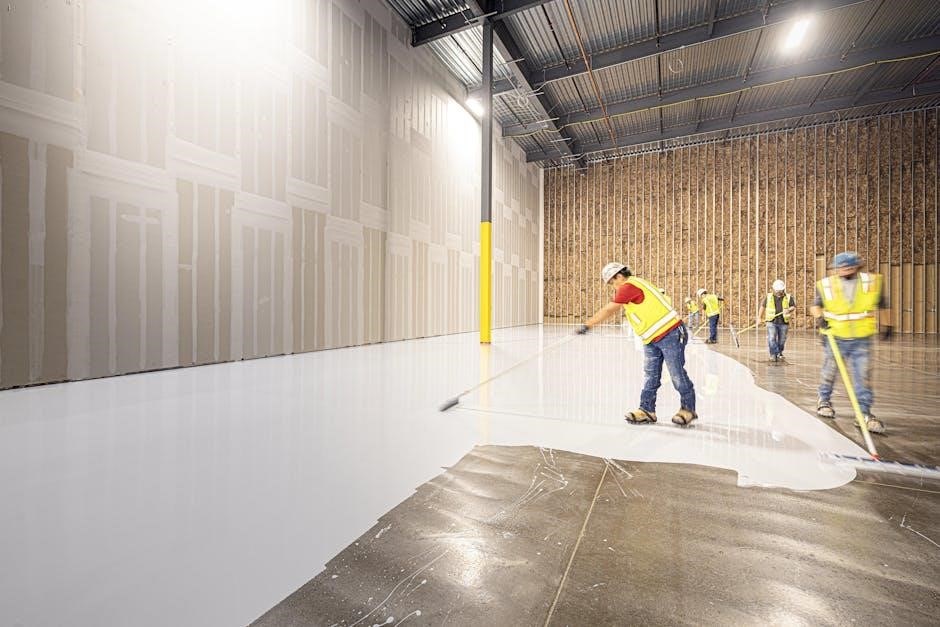
The quick setting time minimizes project delays, allowing for faster flooring installation. Utilizing these levelers ensures optimal adhesion and longevity of the finished floor, providing a stable and aesthetically pleasing result, crucial for both residential and commercial projects.
Patching Damaged Concrete Surfaces
Rapid Set concrete levelers excel at repairing spalled, cracked, or otherwise damaged concrete surfaces efficiently. These products offer a robust solution for restoring structural integrity and improving aesthetics. Non-sag formulas are ideal for vertical repairs, preventing material run-off, while self-leveling options quickly fill larger depressions.
The fast-setting nature minimizes downtime and disruption. Properly prepared surfaces, combined with Rapid Set’s advanced technology, create durable, long-lasting patches that seamlessly blend with existing concrete, offering a professional finish for both functional and cosmetic improvements.
Tools and Materials Required
Successfully applying Rapid Set concrete leveler demands specific tools and materials for optimal results. Essential items include the Rapid Set concrete leveler itself – choosing between Non-Sag and Self-Leveling formulas based on the project. You’ll need appropriate mixing buckets, a drill equipped with a robust mixing paddle, and measuring containers for accurate proportions.
Crucially, prioritize safety with gloves, a dust mask, and eye protection. Additional tools may include a trowel, screed board, and a primer suitable for concrete surfaces to ensure strong adhesion and a flawless finish.
Safety Gear (Gloves, Mask, Eye Protection)
Working with Rapid Set concrete levelers necessitates strict adherence to safety protocols. Cement-based products can be irritating to skin, eyes, and the respiratory system. Therefore, wearing heavy-duty, chemical-resistant gloves is paramount to prevent skin contact and potential burns. A properly fitted dust mask or respirator is crucial to avoid inhaling cement particles, safeguarding your lungs.
Furthermore, safety glasses or goggles are essential to protect your eyes from splashes or airborne debris during mixing and application. Prioritizing these safety measures ensures a safe and comfortable working environment.
Mixing Equipment (Buckets, Drill with Mixing Paddle)
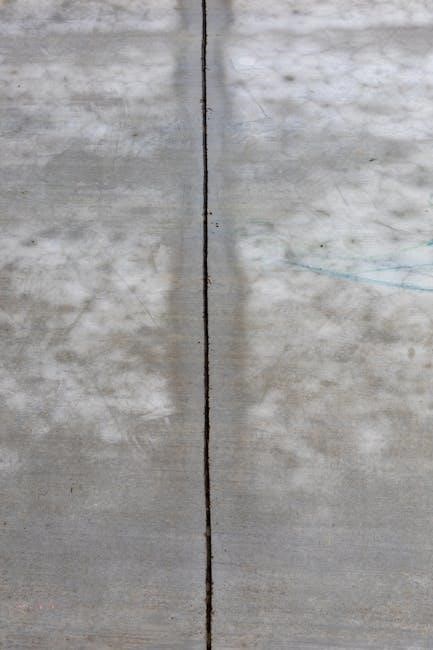
Proper mixing is vital for achieving optimal Rapid Set concrete leveler performance. You’ll require clean, sturdy buckets – plastic is preferable – of adequate size to accommodate the batch you’re preparing, following the product’s instructions. A variable-speed drill is essential, coupled with a robust mixing paddle specifically designed for concrete or mortar.
Avoid using paddles that are bent or damaged, as they won’t mix effectively. Ensure the drill has sufficient power to handle the viscosity of the leveler. Having multiple buckets can streamline the process, especially for larger projects.
Surface Preparation – Crucial First Steps
Thorough surface preparation is paramount for successful Rapid Set concrete leveler adhesion and longevity. Begin by meticulously removing all debris – dust, dirt, grease, oil, loose particles, and any existing coatings. A concrete grinder or scraper may be necessary for stubborn residues. The surface must be structurally sound and free from cracks or voids that could compromise the leveler’s integrity.
Repair any significant damage before proceeding. Finally, consider priming the surface; this enhances bonding and prevents rapid moisture absorption, leading to a stronger, more durable result.
Cleaning & Removing Debris
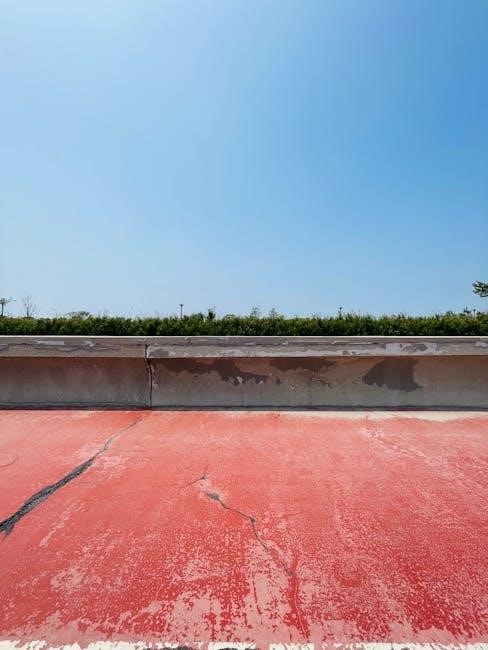
Effective debris removal is the foundation of a successful Rapid Set application. Start with a thorough sweeping to eliminate loose particles. Next, employ a vacuum with a HEPA filter to capture fine dust. For stubborn contaminants like oil or grease, utilize a concrete degreaser, following the manufacturer’s instructions carefully.
Scraping may be needed for paint or adhesive remnants. Ensure the surface is completely dry before proceeding. Any remaining debris will hinder proper bonding and potentially cause leveler failure, so diligence is key.
Priming the Surface for Optimal Adhesion
Priming is critical for ensuring a strong, lasting bond with Rapid Set concrete levelers. Select a primer specifically designed for concrete and compatible with the leveler being used. Apply the primer evenly, following the manufacturer’s recommended coverage rate – typically with a brush, roller, or sprayer.
Allow the primer to fully dry before pouring the leveler; drying times vary based on temperature and humidity. Priming seals the concrete, reduces porosity, and promotes superior adhesion, preventing potential issues like delamination.
Mixing Instructions: Achieving the Right Consistency
Precise mixing is paramount for Rapid Set concrete levelers to perform optimally. Always follow the manufacturer’s water-to-powder ratio meticulously – deviations can compromise strength and setting time. Use a drill with a mixing paddle in a clean bucket, adding powder slowly to the water while mixing continuously.
Mix thoroughly, scraping the sides and bottom to ensure a uniform, lump-free consistency. Avoid over-mixing, which can introduce excessive air. The ideal consistency resembles a thick, creamy paste.
Pouring and Spreading the Leveler
Once mixed, promptly pour the Rapid Set leveler onto the prepared surface. Begin in the lowest area and work your way outwards, ensuring continuous coverage to avoid cold joints. For larger areas, pour in manageable sections. Immediately after pouring, use a screed board to distribute the material evenly across the surface, guiding it to fill low spots.

Avoid overworking the leveler during this stage; focus on achieving the desired depth and eliminating significant imperfections before proceeding to the next step.
Leveling Techniques: Ensuring a Smooth Finish
Achieving a perfectly level surface requires skillful technique. Following the screed board pass, utilize a magnesium float trowel to begin initial smoothing, embedding the aggregate and removing any surface irregularities. Allow a slight set before switching to a steel trowel for a final, polished finish.
For self-leveling compounds, minimal troweling may be needed. Feather edges carefully to blend with existing concrete. Proper technique minimizes imperfections and maximizes the leveler’s performance.
Using a Screed Board
A screed board is essential for initial leveling of rapid-set concrete. Position the board across the poured leveler, using a sawing motion to distribute the material evenly. Ensure the screed board spans at least two supports or screed guides for consistent results.
Apply firm, even pressure, removing excess material and filling low spots. Multiple passes, at different angles, refine the surface. Proper screeding establishes the foundational level before troweling, crucial for a smooth, durable finish.
Utilizing a Trowel for Final Smoothing
After screeding, a trowel refines the surface of the rapid-set concrete leveler. Begin with a steel trowel, using overlapping arcs and consistent pressure. This embeds larger aggregate and closes surface pores. For a glass-smooth finish, transition to a magnesium float, then a final steel trowel pass.
Maintain a slight downward angle, avoiding digging into the surface. Work quickly, as rapid-set concrete gains strength fast. Proper troweling minimizes imperfections and maximizes durability, creating a flawless base for flooring.

Curing Process & Timing

Rapid Set concrete levelers, unlike traditional mixes, achieve significant strength remarkably quickly. While not requiring extensive curing, proper hydration is still vital. Mist the surface lightly with water immediately after troweling to aid initial set, avoiding saturation.
Foot traffic can typically resume within 2-4 hours, and most flooring installations within 24-72 hours, depending on ambient temperature and product specifications. Full strength is usually attained within 7 days. Protect from extreme temperatures and direct sunlight during this period.
Troubleshooting Common Issues
Cracking can occur due to rapid drying or excessive shrinkage; maintain consistent moisture during initial set and consider control joints for larger areas. Improper mixing – too much or too little water – leads to weak spots or uneven setting.
Always adhere strictly to the manufacturer’s water-to-powder ratio. If the mix sets too quickly, it indicates insufficient water; conversely, a soupy mix suggests overwatering. Address these issues promptly during application for optimal results and a durable, level surface.
Cracking & Shrinkage Prevention
To minimize cracking, proper curing is paramount; maintain consistent moisture levels for the first 24-72 hours using plastic sheeting or a curing compound. Controlling the environment—temperature and humidity—also plays a vital role.
Avoid rapid temperature changes and direct sunlight during the initial set. For larger pours, consider incorporating shrinkage-reducing admixtures. Proper surface preparation and adherence to the recommended mixing ratios are crucial preventative measures, ensuring a durable and crack-resistant leveled surface.
Addressing Improper Mixing
If the rapid set concrete leveler is mixed with too much or too little water, its performance will be compromised. A too-dry mix results in poor flow and adhesion, while excess water weakens the final product and extends setting time.
If improperly mixed, do not attempt to salvage the batch. Discard it and remix according to the manufacturer’s instructions. Thoroughly clean mixing equipment before remixing. Accurate measurement and consistent mixing with a drill and paddle are essential for optimal results and prevent costly rework.
CTS Rapid Set Product Overview (Non-Sag & Self-Leveling)
CTS Cement offers specialized Rapid Set products designed for diverse leveling needs. Their Non-Sag Sealant and Adhesive excels in vertical applications, preventing slumping and providing robust bonding. Available in black, it utilizes solvent-free hybrid silane polyether technology.
Conversely, the Self-Leveling Sealant is ideal for horizontal surfaces, flowing easily to create a smooth, even finish. Both formulations are known for their rapid setting times and non-shrink characteristics, offering professional-grade performance for contractors and DIY enthusiasts alike.
Safety Precautions & Handling
When working with Rapid Set concrete levelers, prioritize safety. Always wear appropriate personal protective equipment (PPE), including gloves, a dust mask, and eye protection to prevent skin and respiratory irritation. Ensure adequate ventilation during mixing and application.
Avoid direct contact with the product, and if contact occurs, rinse thoroughly with water. Store materials in a cool, dry place, away from direct sunlight and moisture. Follow all manufacturer’s instructions on the product packaging for safe handling and disposal procedures.
Estimated Costs & Coverage Rates
The cost of Rapid Set concrete leveler varies based on product type (Non-Sag vs. Self-Leveling) and quantity purchased. Expect to pay roughly $40-$80 per 50lb bag, though prices fluctuate with market conditions. Coverage rates depend on the desired thickness and surface porosity.
Generally, a 50lb bag covers approximately 0.5 to 0.75 cubic feet. Factor in primer costs ($20-$40 per gallon) and tool rentals. Accurate estimation requires measuring the area and calculating the volume of leveler needed for the project.
Long-Term Maintenance & Care
Properly cured Rapid Set concrete leveler requires minimal long-term maintenance. Avoid exposing the surface to harsh chemicals or extreme temperature fluctuations, which could compromise its integrity. Periodic cleaning with a mild detergent and water is sufficient to maintain appearance.
Sealing the leveled surface with a concrete sealer can enhance durability and protect against staining. Inspect annually for any signs of cracking or deterioration, addressing minor issues promptly to prevent larger problems. Regular care ensures a lasting, smooth, and level surface.